ICW Projects
Two Funds, One Mission: Advancing Women’s Rights Worldwide
The Small Development Fund
The heart of ICW-CIF’s grassroots action.
The Small Development Fund is the primary instrument through which the International Council of Women (ICW-CIF) turns its mission into action at the grassroots level. It empowers women members to identify needs, design solutions, and lead change within their own communities.
Through seed grants of up to €4,500 net, the Fund supports women-led initiatives developed from the ground up, nurtured by affiliated National Councils, and implemented with close support and oversight from ICW-CIF. This bottom-up approach ensures that resources reach where they matter most: women acting for women.
Sustained by the solidarity of National Councils and Life members, the Small Development Fund embodies ICW-CIF’s core values of leadership, participation, and collective responsibility. It is where women’s ideas become action, and local initiatives grow into lasting impact.
The Lydie Rossini Fund
Empowering women. Transforming communities. Shaping the future.
The Lydie Rossini Fund was created through the visionary generosity of Madame Lydie Rossini van Hissenhoven, Patron of the International Council of Women (ICW-CIF), to advance the rights, dignity, and opportunities of women and girls across the globe.
Guided by the enduring mission of ICW-CIF since 1888, the Fund supports women-led development initiatives that promote equality, education, economic empowerment, leadership, peace, and freedom from violence. Each project reflects a simple but powerful principle: when women are empowered, families thrive, communities grow stronger, and societies become more just and sustainable.
Through the commitment and expertise of ICW-CIF affiliated National Councils, the Lydie Rossini Fund invests in locally driven solutions, designed by women, for women, creating lasting impact where it matters most.
Supporting Cook Islands NCW report to CEDAW
Funded by ICW-CIF, this project aims to strengthen the impact of women’s advocacy in the Cook Islands by supporting the preparation of a high-quality NGO (shadow) report to CEDAW. It is based on a collaborative partnership between NCW New Zealand (NCWNZ) and the Cook Islands National Council of Women (CINCW).
Through in-person relationship building and expert peer support, the project enhances CINCW’s capacity to engage effectively with the CEDAW reporting process and to use international mechanisms to amplify women’s voices and advance gender equality at national and international levels. It also fosters regional solidarity and reciprocal learning among National Councils of Women in the Pacific.
Engaging deaf women in contemporary issues to achieve a fairer society
This project aims to increase the meaningful participation of deaf women in debates and campaigns on key contemporary issues affecting all women, including social care, digital safety, poverty, violence against women and girls, and women’s health.
By recognising both shared and specific experiences of deaf women, the project focuses on improving accessibility and inclusive practices for online and in-person events. It will develop and disseminate good-practice guidance, provide qualified BSL interpreters, and organise targeted workshops in partnership with specialist organisations.
The project will enable deaf women of all ages to engage fully in national meetings and policy discussions, ensuring their perspectives are better integrated into mainstream advocacy and decision-making at national and international levels.
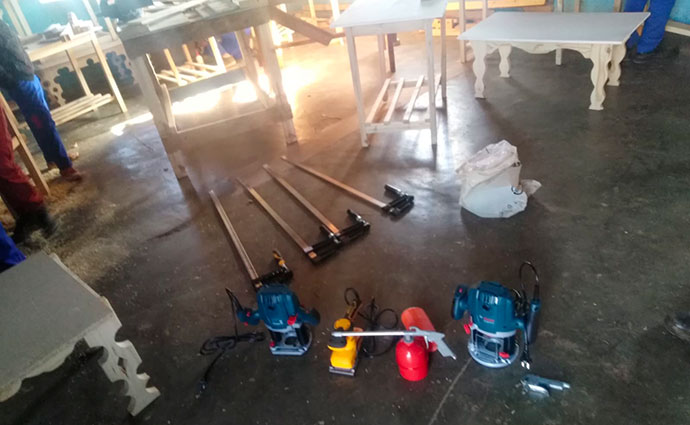
Enhancing Vocational Schools Infrastructure for Carpentry and Catering Training in Pitseng and Makhethisa
Creation of jobs especially for vulnerable children who cannot reach tertiary education for different challenges such as teenage pregnancies and those who could not finish their classes. Moreover, Lesotho is faced with high unemployment of universities graduates and many of the youth are now opting to technical and vocational schools because in such schools they acquire skills which help them to earn livelihood and to create more jobs for other youth who are stranded on how to put bread on the table.
Empowering Women through Creative Economic Skills Training
The project aims to empower at least 50 women in West Jakarta by enhancing their creative economy skills, building community-based enterprises, and improving access to digital marketing and business mentoring. It addresses women’s limited access to training and funding while promoting gender equality and economic independence. Scheduled for November–December 2025, the project’s sustainability will be ensured through the establishment of a Women Creative Hub for continuous training and cooperative business growth.
Protection of Women’s Rights in Prison, Karachi
This project seeks to protect and promote the human rights, dignity, and well-being of women prisoners in Karachi. It addresses key gaps in health, legal awareness, psychosocial support, and economic reintegration faced by women in detention.
The project will improve health and hygiene conditions, with particular attention to menstrual hygiene management, ensuring dignity and basic health rights. It will raise legal awareness among women prisoners, enabling them to better understand and exercise their rights.
In parallel, the project will provide skill-based vocational training to support sustainable economic reintegration after release, and establish regular counselling sessions to promote psychological well-being, resilience, and social rehabilitation.
Projet ZERO TABOU / EPAD Ecologic Pad
For many girls and women, menstruation remains a source of exclusion and silence. The lack of affordable sanitary protection leads to school absenteeism, loss of dignity, and persistent taboos around the female body.
This project offers a practical and empowering solution. By producing reusable sanitary pads locally, we enable girls to attend school with confidence while creating income-generating opportunities for women through ecological sewing and women-led cooperatives.
Beyond access to products, the project challenges stigma and promotes open dialogue around menstrual health. It strengthens self-esteem, supports women’s autonomy, and fosters respect for the female body.
This community-driven, self-sustaining initiative combines health, education, and economic empowerment to create lasting change for girls, women, and their communities.
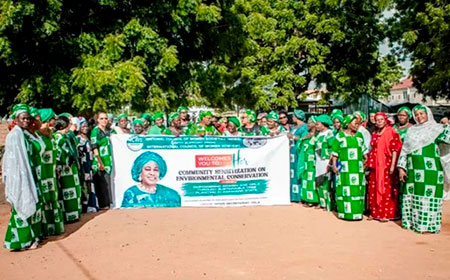
Empowering Women and Girls through Sustainable Tree Planting and Briquette Production in Adamawa State, Nigeria
Funded by ICW-CIF, this project aims to strengthen women’s participation in environmental management and sustainable development in Adamawa State. It promotes the production and use of eco-friendly briquettes as an alternative to firewood, helping to reduce deforestation, improve health, enhance safety, and mitigate climate change.
The project will train and empower 50 women and girls in briquette production using locally available waste materials, providing them with practical skills and sustainable income opportunities. By reducing time spent collecting firewood and exposure to health and security risks, the initiative improves the well-being of women and their communities.
Designed as a sustainable and replicable model, the project contributes to environmental conservation, women’s economic empowerment, and a cleaner, safer future for coming generations.
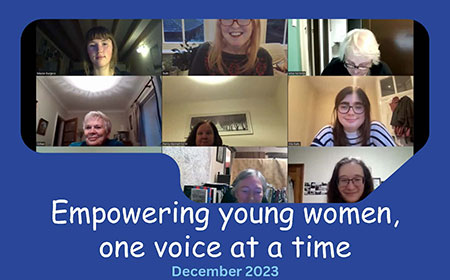
Changemakers – Engaging Young Women for the Future of Women’s Activism
This project seeks to increase the engagement of young women aged 16 to 30 across the UK in the work of NCWGB, NCYW, ICW and the Commission on the Status of Women (CSW), with a particular focus on young women from underrepresented communities, including those in rural and disadvantaged urban areas, women with disabilities, and BAME, migrant and LGBTQ+ groups.
Led by young women, the project develops innovative and inclusive ways to encourage early and lasting involvement in women’s rights activism. It responds to declining engagement within women’s organisations by addressing generational and diversity gaps.
Building on strengthened partnerships across England, Wales, Scotland and Northern Ireland, the initiative expands outreach and rebuilds connections disrupted by the Covid-19 pandemic. A key outcome will be a practical toolkit enabling other ICW organisations to replicate successful engagement approaches.
By empowering young women today, the project strengthens the diversity, sustainability and future impact of the women’s movement.
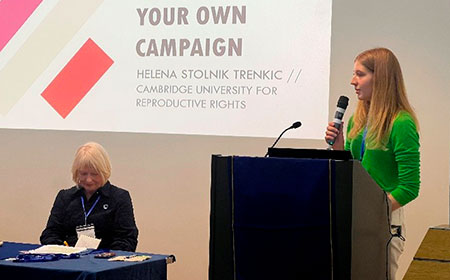
Creation of a rehabilitation, information and cultural public space for women and children in the village of Sedniv, Chernihiv region
Funding from the Lydie Rossini Fund enables the creation of a vital community space in the de-occupied village of Sedniv, dedicated to the psychosocial rehabilitation, training and creative activities of women and children affected by the war. By repairing and equipping a war-damaged hall within a historic museum complex, the project transforms an unusable space into a safe, multifunctional centre for recovery, learning and cultural life.
This support directly strengthens the resilience of women, who carry increased social and economic responsibilities during the conflict, while providing children with a stable environment for healing and expression. The project makes a tangible contribution to social recovery and community rebuilding in rural Ukrainian areas impacted by occupation.
Refurbishing and upgrading of TURFLOOP Preschool-Cum-After Care and Youth Post Rehabilitation Centre
In the predominantly rural Limpopo Province, working women face serious challenges in securing safe childcare while they are at work. Built in 1986 by the National Council of African Women (NCAW), the Turfloop Pre-School was created to support these mothers and their children. However, the deterioration of fencing and security infrastructure has left the facility vulnerable to vandalism and unsafe for children, forcing its closure.
This project aims to rehabilitate and reopen the Turfloop Pre-School by restoring security, upgrading facilities to meet current Early Childhood Learning and Development standards, and creating a safe, nurturing environment for children. The project will also contribute to women’s empowerment and youth support, offering skills development opportunities and post-rehabilitation care for vulnerable young people.
By revitalising this centre, the project seeks to support rural working women, protect children, and restore hope and opportunities within the community.
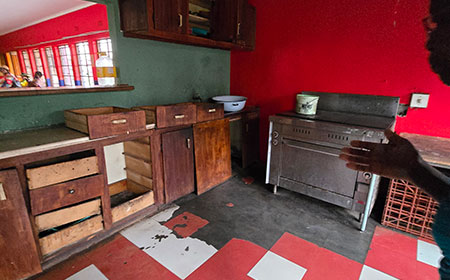
Douar Jmouhi Sewing Cooperative
The cooperative works to improve the quality of life of women and their families, especially girls, by promoting women’s empowerment through sewing and entrepreneurship.
It supports vulnerable women in transforming technical sewing skills into income-generating projects, promotes equality of opportunity, and helps women—particularly the poorest—achieve financial independence.
This initiative is significant as it provides women with essential skills and knowledge to improve their social and economic status, both locally and beyond.
Think, Learn and Succeed. A Short Digital Entrepreneurship Course
The project aims to combat poverty and social exclusion through education, with a focus on business and technology. It provides vulnerable women with the opportunity to start their own online businesses, develop entrepreneurial skills, build confidence, and achieve financial independence.
The project also targets migrants and third-country nationals who wish to strengthen their knowledge, develop new skills, and create online income-generating activities.
By offering affordable access to essential digital and business skills, the project enables women to launch online activities at a much lower cost than traditional start-ups, supporting long-term economic and social inclusion.
Improving the quality of life of women with disabling diseases in Catalonia, including elderly women
The program aims to support, empower, and educate women—particularly elderly women—living with chronic rheumatic diseases, with a focus on shared responsibility for care and self-care. It seeks to improve their physical and mental well-being, strengthen self-worth, and enhance emotional and social resources, while promoting equity in care responsibilities within families and communities.
Through peer mentoring, training on gender equality in care, psychological support, and improved access to information and networks, the program helps women better manage their health, reduce isolation, and actively engage in their care. It also collects and analyzes data to highlight gender inequalities in care work and advocates for systemic changes in healthcare policies and practices, making visible the realities of women who combine illness, disability, ageing, and caregiving roles
WASTO at General Mariano Alvarez
The project aims to improve solid waste management in Mati, Davao Oriental by assessing current practices and strengthening the role of women in waste management systems. It will develop and implement eco-friendly and sustainable solutions that actively involve women, while promoting household awareness and practices in waste segregation, reduction, recycling, and marketing.
By diverting plastic waste from rivers and oceans, the project will turn single-use plastics into income-generating resources. Collected plastics will be recycled into furniture in partnership with Winder Recycling Company in Davao City. The project, implemented over 15 months, will create direct and indirect employment for women, increase their incomes, and reduce solid waste generation in the municipality. After the initial setup, the project will become self-sustaining through the sale of recycled products, with revenues reinvested in operations and maintenance.
Engagement and Membership Development: National Council of Young Women, Members and Associate Members
The project aims to increase the engagement of young women aged 16–25 in education, leadership and decision-making at national and international levels by developing inclusive, youth-led methods of participation. It seeks in particular to reach young women facing structural barriers, including those from disadvantaged, rural, BAME, migrant, refugee, disabled and LGBTQ+ communities, while rebuilding peer networks weakened by the Covid-19 pandemic. As a result, the project will strengthen young women’s leadership skills, confidence and collective capacity, increase the diversity of participation within women’s organisations, and establish more inclusive and sustainable models of youth engagement across all nations of the United Kingdom.